
Laboratory & Analysis
Four Specialized Laboratories, a Single Scientific Infrastructure
Scientific Analysis & Testing Services
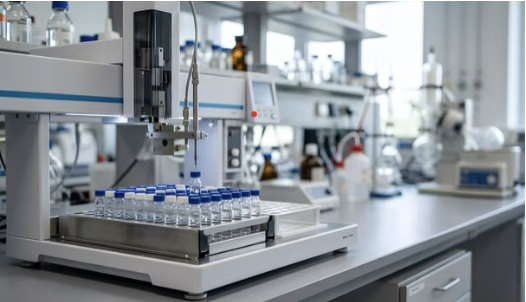
At NPAL, analytical activities are organized across four specialized divisions dedicated to specific types of scientific research, environmental monitoring, and materials testing.
Our Specialized Laboratories
-
Chemical Laboratory
The Chemical Laboratory performs high-precision quantitative and qualitative analyses on complex environmental and industrial matrices using advanced instrumental techniques.
Core Capabilities: Identification and quantification of organic and inorganic compounds in water, soil, waste, and industrial materials.
-
Microbiological Laboratory
The Microbiological Laboratory studies the presence, concentration, and activity of microorganisms across various environmental and industrial media.
Core Capabilities: Environmental monitoring, biological degradation studies, and ecosystem process evaluations.
-
Research & Development (R&D) Laboratory
Our R&D Laboratory supports high-level scientific and industrial innovation, focusing on material behavior and technology development.
Core Capabilities: Advanced experimental setups integrating chemical, physical, and biological testing to analyze material behavior in diverse applications.
-
Biodegradability & Compostability Laboratory
NPAL features dedicated infrastructure to evaluate how materials break down across different environmental conditions.
Core Capabilities: Standardized testing according to international protocols to support product eco-certifications and circular economy initiatives.
What We Analyze
Our technical teams cover a wide spectrum of environmental, industrial, and material matrices:
| Category | Typical Sample Matrices |
|---|---|
| Environmental Matrices |
|
| Industrial & Process Samples |
|
| Materials, Waste & Products |
|
Quality Assurance & International Standards
NPAL delivers reliable, legally sound, and actionable technical data through strict quality protocols:
- Standardized Methods: Testing aligned with ISO and ASTM international standards.
- Instrumentation: Advanced chromatographs, spectrometers, and automated analyzers.
- Quality Control: Continuous internal and external control checks performed on every analytical run.
- Traceability & Reporting: End-to-end sample tracking from chain of custody to clear, actionable final technical reports.
Industries We Serve
- Chemical & Advanced Materials Manufacturing
- Environmental Services, Energy & Waste Management
- General Manufacturing & Industrial Processing
- Agri-Food & Packaging Sectors
- Public Administrations & Regulatory Control Agencies
- Universities & Academic Research Centers
Custom Analytical Plans & Consulting
Beyond standard testing, NPAL partners with organizations to design tailored monitoring programs for regulatory compliance, authorization filings, or specialized material studies.
Frequently Asked Questions (FAQ)
What types of samples can NPAL analyze?
NPAL handles environmental, industrial, and material samples—including water, soil, air, emissions, waste, and polymers. For non-standard or novel matrices, our technical team will develop a customized analytical approach.
Are NPAL analytical results recognized by regulatory bodies?
Yes. Testing is performed in accordance with internationally validated standards (ISO, ASTM), ensuring full compliance for regulatory filings, certifications, and legal proceedings.
Can NPAL help define a monitoring or testing plan?
Absolutely. We collaborate directly with clients to design cost-effective, fit-for-purpose analytical protocols tailored to your technical or regulatory goals.
How are results delivered?
Data is compiled into comprehensive, fully traceable technical reports detailing analytical methodologies, detection limits, and quality assurance metrics.
Biodegradability
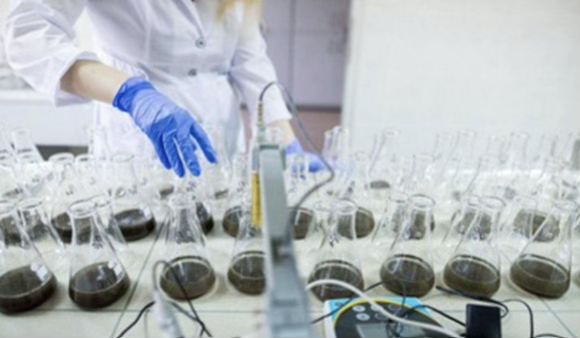
Biodegradability & Compostability Testing Services
Understanding how a material degrades means truly understanding its end of life.
The sustainability of materials does not end at design or production. The real test is what happens after use—when materials enter natural environments or waste treatment systems.
For materials designed to be biodegradable or compostable, performance must be validated through scientific measurement within specific biological environments (compost, soil, water, or industrial systems).
The Science of Biodegradation
Biodegradability is a measurable biological process governed by the interaction between material composition, environmental conditions, and microbiological activity.
To assess material performance accurately, international standards require standardized experimental testing that measures three core metrics:
- Biodegradation Rate: The speed and conversion of organic carbon into CO2, water, and biomass.
- Disintegration: The physical breakdown of the material into micro-particles during composting or degradation cycles.
- Ecotoxicity & Safety: Ensuring the remaining degraded material and compost are safe and non-toxic for environmental systems.
At NPAL, these processes are evaluated through internationally recognized scientific protocols—delivering reliable data to drive the circular economy.